

Never Miss an Update
Add islifearecipe.net as a Preferred Source on Google to see more of our content in AI Mode and AI Overviews.
➕ Add to Preferred SourcesBest Japanese Roast Pork Recipe EVER
A Taste of Japan in Your Own Kitchen This is an amazing Japanese roast pork recipe that my friend Emi shared with me. Japanese roast pork, roasted with sake – you just know this is going to be good! While it’s traditionally served with a salad, I’ve put my own spin on it to make it a complete meal.
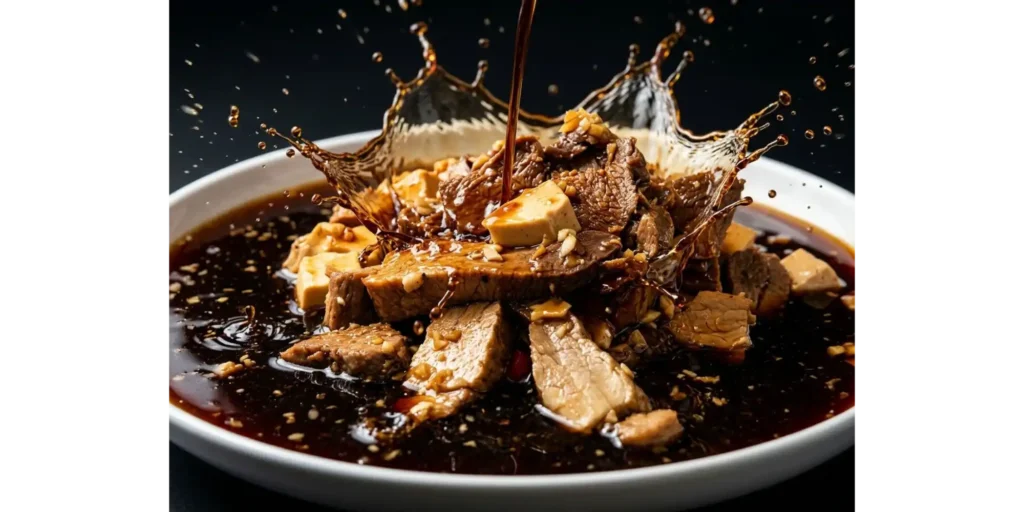
Best Japanese Roast Pork Recipe Ingredients
Japanese Roast Pork
- 600g pork loin, cut into cubes
- 2 tablespoons grated garlic (or finely chopped)
- 1 teaspoon salt
- 1 teaspoon ground black pepper
For the Sauce
- 200ml soy sauce
- 100ml cooking sake
- 100ml mirin
- 200g silken tofu, cut into 1 inch cubes
For the Egg Fried Rice
- 3 cups cooked white rice
- Green Peas
- Sweetcorn
- 2 tablespoons vegetable oil
- 1 tablespoon margarine
- 3 eggs, beaten
- 3 cloves garlic, finely chopped
- 2-3 tablespoons soy sauce
How to cook the best Japanese Roast Pork Recipe
- Rub the pork all over with the salt, pepper and grated garlic. Place in a bowl and let marinate for 30 minutes.
- Preheat the oven to 200°C (400°F).
- Place the Japanese roast pork on a baking tray lined with foil or lightly greased to prevent sticking. Roast for 20 minutes.
- Turn the oven temperature down to 180°C (350°F) and roast Japanese roast pork for another 20 minutes.
- Remove Japanese roast pork from oven and let rest for 5 minutes before slicing into bite-sized pieces.
- In a saucepan, combine the soy sauce, sake, and mirin. Bring to a boil and let simmer for 2-3 minutes until alcohol evaporates.
- Remove from heat and pour sauce into a bowl. Add the sliced Japanese roast pork and tofu cubes. Gently stir to coat. Set aside.
- In a wok or large skillet, heat oil and margarine over medium-high heat.
- Add cooked rice and fry for 2-3 minutes, breaking up any clumps.
- Add Green Peas & Sweetcorn
- Push rice to sides of wok. Add beaten eggs to center and scramble until just set.
- Stir eggs into rice. Add garlic and continue frying for 1 minute.
- Stir in soy sauce and remove from heat.
- To serve, place egg fried rice in bowls. Top with Japanese roast pork and sauce. Enjoy!
Notes
- For best results, use a good quality pork loin. The marinade helps keep the Japanese roast pork juicy while roasting.
- Roasting the Japanese roast pork in stages at different temperatures ensures it cooks through without drying out.
- The sauce infuses the Japanese roast pork with delicious umami flavor. Mirin adds sweetness to balance the saltiness of soy.
- Silken tofu absorbs the sauce and adds protein, making this a complete meal.
- Frying the rice imparts delicious flavor. Scrambled eggs and garlic add extra richness.
- Adjust soy sauce to taste. Add more for saltier fried rice.
- Try serving with a side of miso soup and steamed broccoli.
Conclusions
And that’s the magic of a great Japanese roast pork recipe — crispy edges, juicy meat, and layers of savoury flavour that somehow feel rich without becoming too heavy. Whether it’s glazed with soy, mirin, sake, garlic, or a touch of miso, Japanese-style pork has this incredible balance of sweet, salty, smoky, and umami that makes every bite ridiculously satisfying. The slow roasting lets the fat render properly, the skin crisps up beautifully, and suddenly your kitchen smells like an izakaya tucked away down a side street in Tokyo. Add steamed rice, pickles, or ramen on the side and you’ve got comfort food done properly.
What makes Japanese roast pork so addictive is its versatility. Slice it thin for rice bowls, pile it into bao buns, serve it over noodles, or just stand there in the kitchen “testing” bits straight off the chopping board while nobody’s watching. It’s the sort of recipe that rewards patience — low heat, good seasoning, and letting the flavours develop naturally instead of rushing things. Simple ingredients, careful cooking, and massive flavour payoff… which is basically what Japanese comfort food does best.