

Never Miss an Update
Add islifearecipe.net as a Preferred Source on Google to see more of our content in AI Mode and AI Overviews.
➕ Add to Preferred SourcesBest Japanese Rice Cake Recipe EVER
Japanese Rice Cake Recipe; If you usually do my fried rice recipes, and need a new idea, something original. Hmmmm! You have finger food at parties don’t you. I know I’ll use those Japanese rice moulds and make some fried rice finger food. These are simply delicious and look great too.
Crispy on the outside, soft and wonderfully chewy on the inside, Japanese rice cakes are a comforting classic that showcase the beauty of simple ingredients prepared with care. This delicious recipe transforms cooked Japanese rice into golden, pan-fried cakes packed with savoury flavours and a satisfyingly crisp crust. Whether enjoyed as a light meal, a side dish, or a tasty snack, these homemade rice cakes are an excellent way to use leftover rice while bringing authentic Japanese-inspired flavours to your table.
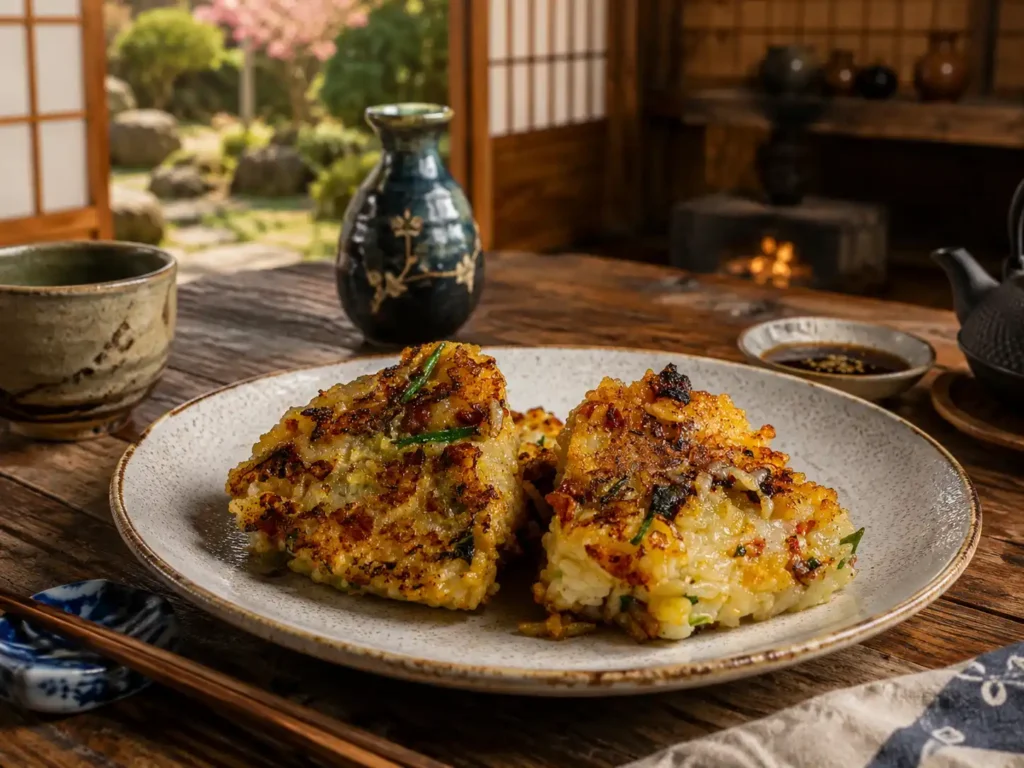
What are the ingredients for the best Japanese Rice Cake Recipe
To make about 30 or so you’ll need;
- 3 cups of cooked white rice;
- 1/2 litre of strong chicken stock – add 2-3 cubes if making from scratch;
- 2 packs of bacon bits or streaky bacon cubed;
- 4-5 finely sliced Spring onions;
- 3 finely sliced garlic cloves;
- 2 tablespoons soy sauce; and
- 1 pack of finely sliced chives.
How to make the best Japanese Rice Cake Recipe at home
- Once the rice is cooked transfer to a pan and add the chicken stock and stir this through on a low heat until it is all absorbed.
- Another pan and bang in the bacon with a touch of oil and get to the stage of the bacon browning and crisping. Add in the garlic, spring onions and soy sauce and stir fry until the garlic is softened. Add the rice and thoroughly mix. Off the heat and stir in the chives. Set aside.
- In a bowl add a good knob of butter, 2 tablespoons of soy sauce and 2 tablespoons of brown sugar – ping in the microwave for a few seconds to melt the butter and stir through until the sugar is dissolved. Set aside.
- When the rice mixture is a little cooled down you need to make shapes. Do you have a little diamond cake shape 2inch long sides about 3/4 inch deep? If yes cool. If no shame. However you can always wet your hands and mould the shapes by hand. Lay these on a flat surface and let them completely cool down. Go and have a cup of tea or something a little more refreshing – cough cough.
- When you are ready to eat – or go to the party as I was, take the little rice shapes and then brush with the soy/butter/sugar mix on both sides. Then in to a big flat pan to fry until crispy and golden brown. There you have it.
They look nothing like fingers, but finger food it is – and it is bloody nice I’ll tell you!!! ENJOY!!!
Why is Japanese rice so good
Japanese rice is far more than just a staple food—it’s the heart of Japanese cuisine and an essential part of everyday life. Short-grain Japonica rice is prized for its slightly sticky texture, delicate sweetness, and ability to hold together when cooked, making it perfect for everything from sushi and onigiri to donburi, fried rice, and traditional rice cakes. In Japan, rice is treated with great respect, and preparing it correctly is considered just as important as cooking the main dish. Every grain should be soft, glossy, and perfectly cooked, providing the ideal accompaniment to seafood, meats, vegetables, and rich umami flavours.
For centuries, rice has played a central role in Japanese culture, history, and traditions. It has been cultivated for over 2,000 years and remains a symbol of prosperity, health, and family. Many traditional celebrations and seasonal festivals still feature rice-based dishes, while everyday meals often begin with a steaming bowl of freshly cooked rice. Its mild flavour makes it incredibly versatile, absorbing the taste of broths, sauces, and seasonings while balancing stronger ingredients such as soy sauce, miso, teriyaki, and grilled meats.
One of the reasons Japanese rice is loved around the world is its remarkable versatility in the kitchen. Leftover rice can be transformed into crispy pan-fried rice cakes, fragrant fried rice, comforting rice porridge, or savoury rice balls filled with delicious ingredients. Its naturally chewy texture and ability to crisp beautifully when pan-fried make it an excellent foundation for countless recipes. Whether served simply with a sprinkle of sesame seeds or reinvented into creative dishes, Japanese rice continues to be one of the world’s most comforting and satisfying ingredients.