

Never Miss an Update
Add islifearecipe.net as a Preferred Source on Google to see more of our content in AI Mode and AI Overviews.
➕ Add to Preferred SourcesBest Laksa Recipe and Cheese Fondue Recipe: How lucky are my kids. What did they get for lunch today? Only a 5 cheese fondue, with thyme and hot dogs, served with crusty burger buns. Not every family gets that for lunch hey!!!

Up next are these three little beauties. Japanese sea bass, stuffed with fresh lime. The start of the deconstructed laksa.

I get to use my new BBQ today and get the fish and some fresh prawns a going on the balcony. I love my new BBQ – it is awesome!!!

It’s all in the home-made sauce. All served up in my paella pan. I think this looks bloody brilliant. This is 3 person dish.

I tell you what I am damned proud of this dish. Bearing in mind I don’t eat fish. I think this looks brilliant. Mod-Sin is the new nickname for this sort of food style. Modern Singaporean, a modern take on a classic.
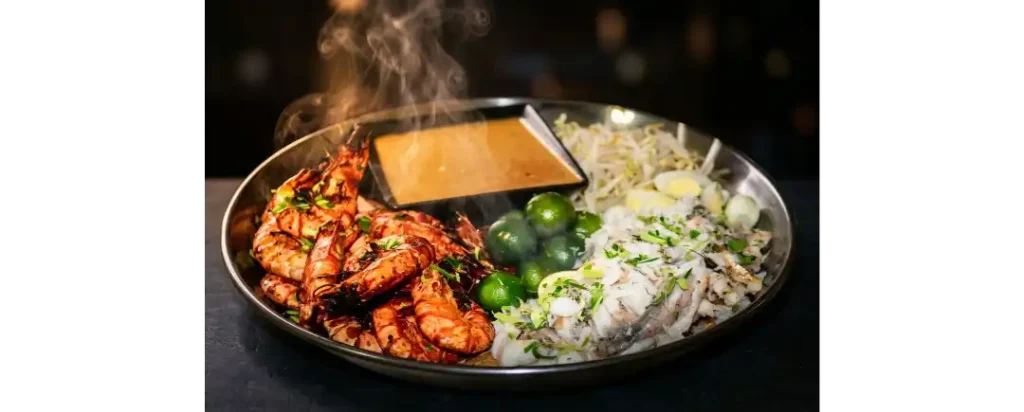
Japanese sea bass, a little oil, salt & pepper and stuff with fresh lime. Get those bad boys on the BBQ. Prawns marinated in some oil and chopped garlic. Boiled quail eggs. Some lightly blanched bean sprouts. A sprinkling of some finely chopped Kaffir Lime leaves, a few Calamansi limes, and of course the amazing home made laksa sauce. Get in there. I’ll make this for you ones day for you, because I know you will – ENJOY!!!
What are the best Asia Recipes? More recipes from Islifearecipe
What is the history of Laksa Recipe?
It’s origins trace back to the Peranakan (Straits Chinese) communities of Southeast Asia — a blend of Chinese migrants and local Malay culture, especially in places like Malacca, Penang, and Singapore. The dish reflects that mix perfectly: Chinese-style noodles combined with Malay spices, herbs, and coconut milk. The name is often linked to the Persian word laksha, meaning noodle, brought along ancient trade routes. Over time, local ingredients like lemongrass, galangal, chilli, and shrimp paste shaped it into the rich, fragrant noodle soup we know today.
As the dish spread across the region, it evolved into different regional styles. In Singapore and parts of Malaysia, you’ll find coconut-based curry — creamy, spicy, and loaded with seafood or chicken. In Penang, the version is asam, which is lighter, tangier, and fish-based with a sour tamarind kick. Each version tells a story of local taste and influence, but they all share the same roots: a dish born from cultural exchange, trade, and the simple idea of combining what’s available into something seriously delicious.